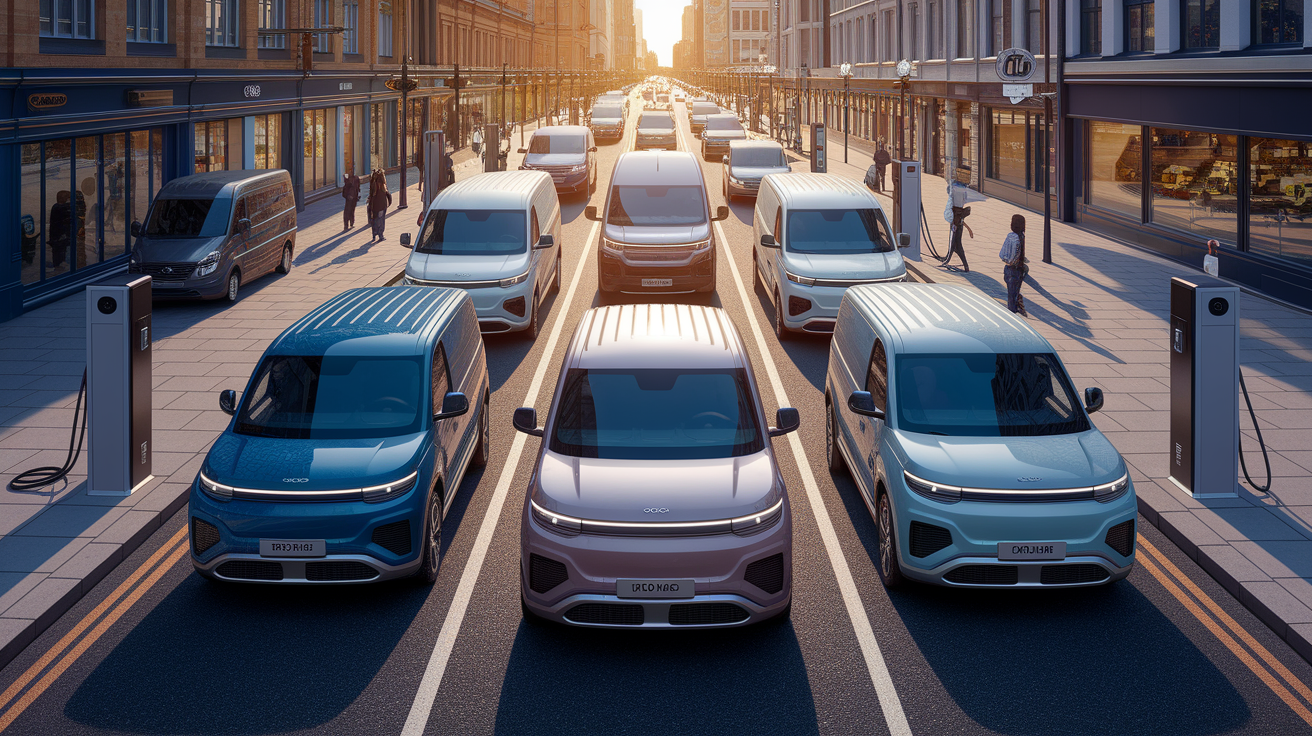
Electric momentum defies diesel downturn
The UK’s light commercial vehicle (LCV) market is shrinking in 2025, but battery electric vans (BEVs) are accelerating in the opposite direction. While total van registrations have fallen 11.4% year-to-date compared with 2024, BEV sales have surged 44.7%, according to data from the Society of Motor Manufacturers and Traders (SMMT). November alone saw BEV registrations climb 25.3% to 2,909 units, marking their highest monthly market share of the year at 12.3%.
This electric uptick comes as large vans—still the backbone of UK fleets—plummeted by nearly 19.7% in registrations, underscoring a broader economic slowdown that’s stalling fleet renewal and casting uncertainty over the pace of decarbonisation.
Government targets loom large
The UK’s Zero Emission Vehicle (ZEV) mandate requires 16% of new LCV sales to be battery electric by the end of 2025. Yet BEVs currently sit at 9.4% market share year-to-date, leaving a significant gap to close within the next 12 months. While the Plug-in Van Grant and the recently launched Depot Charging Scheme aim to bridge this divide, industry voices—led by SMMT chief Mike Hawes—warn that sluggish infrastructure rollout and planning delays could derail progress.
Infrastructure: the critical bottleneck
Even with over 40 BEV models now available for UK buyers, adoption challenges persist:
- High upfront costs due to expensive battery production and limited economies of scale.
- Depot charging delays from lengthy grid connection timelines.
- Public charging gaps—few stations are designed for larger commercial vans.
Fleet operators are calling for fast-tracked planning reforms and targeted funding to adapt public charging infrastructure for commercial needs, ensuring BEVs can match the operational flexibility of diesel counterparts.
Market segmentation in flux
According to Grand View Research, vans up to 2 tons accounted for nearly half of market revenue in 2024, a segment showing resilience amid the downturn. Smaller vans and pickups are posting modest gains, while mid-size and large vans are bearing the brunt of the contraction. The overall LCV market generated approximately USD 8.2 billion last year and is forecast to grow at a 4.7% CAGR through 2030—assuming economic confidence returns and electrification accelerates.
Why BEV growth matters
With 96% of Britain’s 4.6 million licensed vans still running on diesel, electrification is pivotal for cutting transport emissions and improving urban air quality. BEVs not only reduce tailpipe CO₂ to zero but also promise lower lifetime running costs, especially as battery prices trend downward. The growth seen in 2025—despite market headwinds—suggests that early adopters in logistics, delivery, and municipal fleets are proving the operational case for electric vans.
The road ahead
To hit 2025 ZEV targets, the UK van sector needs a dual push: stronger policy enforcement and rapid infrastructure scaling. If government incentives are extended and charging bottlenecks eased, BEV market share could close in on the mandate. The next 12 months will test whether the current surge is the start of an unstoppable transition—or a bright spot in an otherwise challenging commercial vehicle market.
Leave a Reply