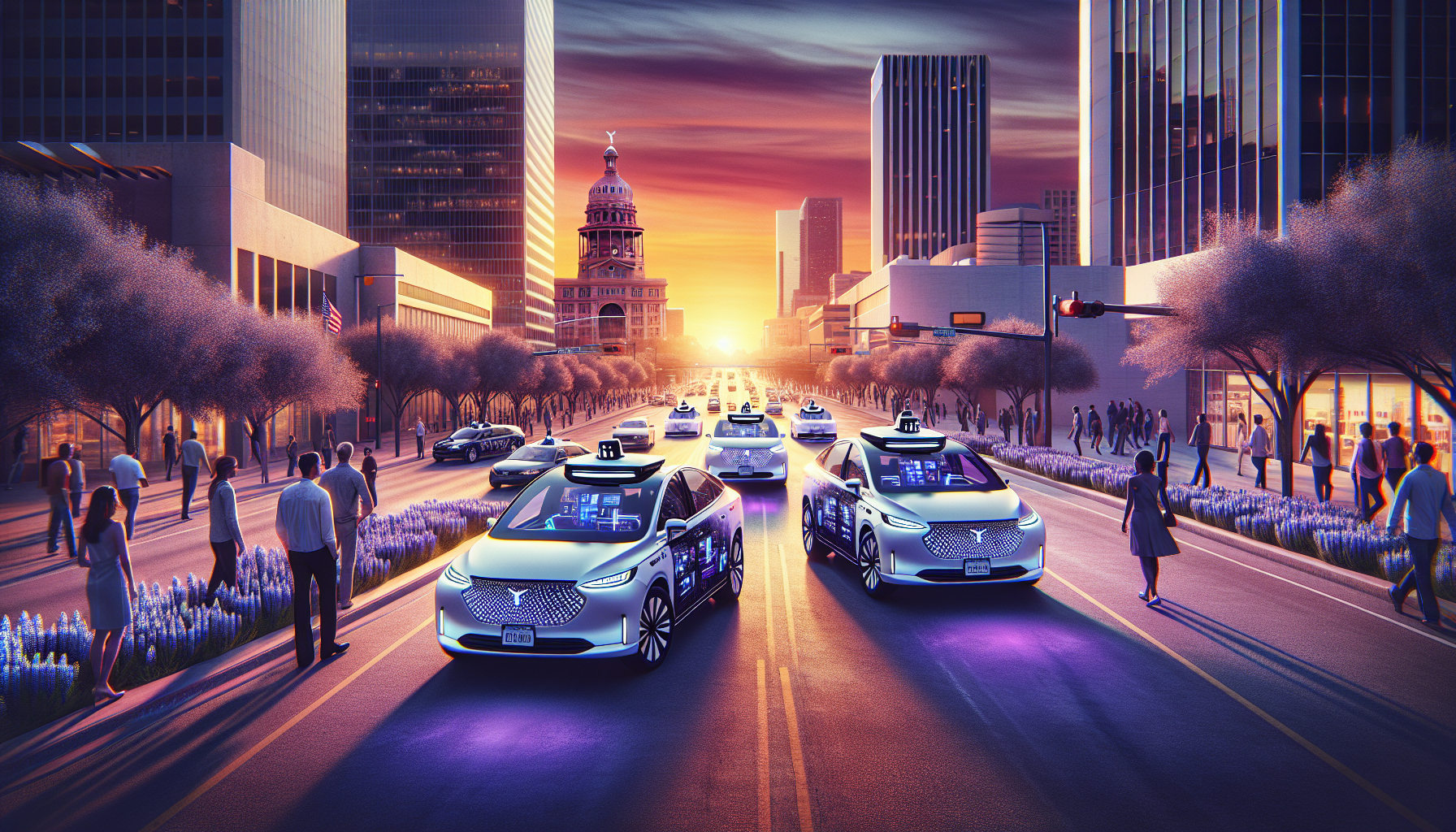
Tesla’s Robotaxi Ambitions Take a Hit: Fleet Slashed to Four in Texas
The Cutdown Fleet
Tesla’s ambitions in autonomous driving face a significant setback as the number of unsupervised robotaxis in Austin, Texas, has dwindled from eight to just four. This reduction highlights ongoing challenges in Tesla’s self-driving technology, especially after a series of troubling incidents plagued its initial rollout.
Initially launched in June 2025, Tesla’s robotaxi service aimed to revolutionize urban transportation. However, just a day after its launch, the service garnered federal attention due to traffic law violations. Fast forward to early March 2026, and reports indicate that half of the fleet has gone silent, raising eyebrows about the reliability and safety of the technology.
Operational Challenges
The rollout of Tesla’s robotaxi service has not been smooth sailing. Following the launch, a January 2026 ice storm temporarily halted operations, and reports quickly surfaced of no public unsupervised rides occurring post-launch announcement. These setbacks underscore a critical need for refinement in Tesla’s approach as they navigate the complexities of fully autonomous vehicles.
According to the Electrek, the initial excitement surrounding unsupervised rides was quickly tempered by operational realities. Despite a fleet of 37 Tesla robotaxis in Austin, the transition to unsupervised operations has proven more complicated than anticipated.
Comparative Insights
The challenges facing Tesla contrast sharply with competitors like Waymo, which employs LiDAR technology for enhanced navigation and safety. Tesla’s reliance on a camera-and-AI-only framework may limit its effectiveness, especially considering its history of incidents, such as failing to stop at railroad crossings and experiencing a crash rate four times higher than that of human drivers.
This limited fleet size not only raises questions about Tesla’s technology but also reflects a cautious expansion strategy. As the company navigates these hurdles, the future of its broader rollout in Texas or the anticipated Cybercab relies heavily on demonstrating reliability and safety in unsupervised operations.
Future Implications
The dwindling number of unsupervised robotaxis in Austin has sparked speculation about the overhyping of Tesla’s technology, particularly regarding its stock valuation and public perception. With a city population exceeding one million, the current fleet of four vehicles seems insufficient to meet potential demand.
As Tesla strives to improve its self-driving capabilities, the road ahead is fraught with challenges. The successful integration of autonomous vehicles is paramount not just for Tesla’s image but also for the industry’s evolution as a whole. The implications of this pause in expansion could shape the trajectory of Tesla’s robotaxi ambitions for years to come.
Leave a Reply