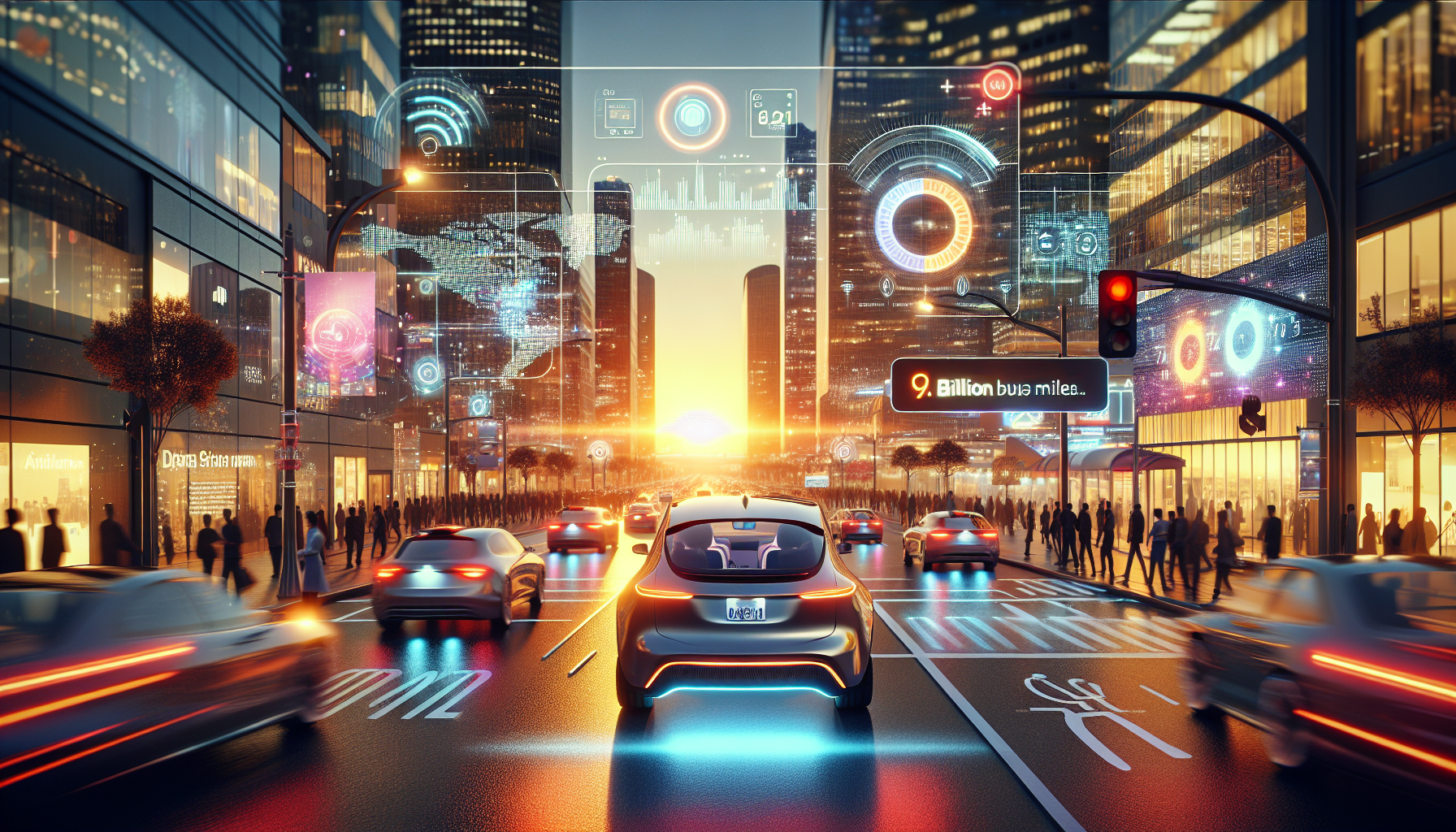
Tesla’s Fsd (supervised) Fleet Surpasses 8.4 Billion Miles: a Leap Towards Autonomy
The Milestone Unveiled
Tesla’s Full Self-Driving (Supervised) system has officially crossed a significant threshold, amassing over 8.4 billion cumulative miles driven with FSD engaged. This remarkable achievement, tracked on Tesla’s official safety page, showcases the company’s commitment to advancing autonomous driving technology through extensive real-world data collection.
The milestone reflects contributions from more than six million Tesla vehicles across various regions, including the U.S., Canada, China, and beyond. Every mile logged is a step closer to achieving the ambitious goal set by CEO Elon Musk, who aims for around 10 billion miles to enable safe unsupervised driving.
Explosive Growth and Data Insights
The trajectory of FSD (Supervised) mileage growth has been nothing short of explosive. In just five years, cumulative miles have surged from a mere 6 million in 2021 to an astounding 670 million in 2023. This exponential increase underscores the significance of Tesla’s growing fleet and the increasing adoption of FSD technology among drivers.
- 2021: 6 million miles
- 2022: 80 million miles
- 2023: 670 million miles
- 2024: 2.25 billion miles
- 2025: 4.25 billion miles
- 2026 (first 50 days): 1 billion miles
As Tesla continues to refine its neural networks through data-driven insights, the implications for the future of driving are profound. Each mile contributes valuable information, particularly from complex city environments where the majority of training scenarios occur.
Implications for the Automotive Landscape
Tesla’s achievement not only highlights its leadership in the electric vehicle market but also sets a competitive benchmark for others in the industry. While competitors like Waymo operate with geo-fenced limitations, Tesla’s nationwide fleet gathers data from diverse driving conditions, allowing for a more comprehensive understanding of real-world scenarios.
Moreover, the safety statistics are compelling. Tesla’s FSD (Supervised) system reportedly experiences lower collision rates compared to traditional driving methods. With features like Automatic Emergency Braking as standard, Tesla underscores its commitment to safer roads and reduced driver workload.
Looking Ahead: The Road to Unsupervised Autonomy
The path to achieving fully unsupervised driving remains complex, with regulatory hurdles and the need for extensive validation still ahead. However, with the current pace of mileage accumulation, experts predict that Tesla may reach the 10 billion-mile target by mid-2026, potentially paving the way for a new era in automated driving.
As Tesla continues to refine its approach, the automotive industry watches closely. The data advantage gained from such extensive mileage could redefine safety standards and operational models in the rapidly evolving landscape of autonomous vehicles.
Leave a Reply