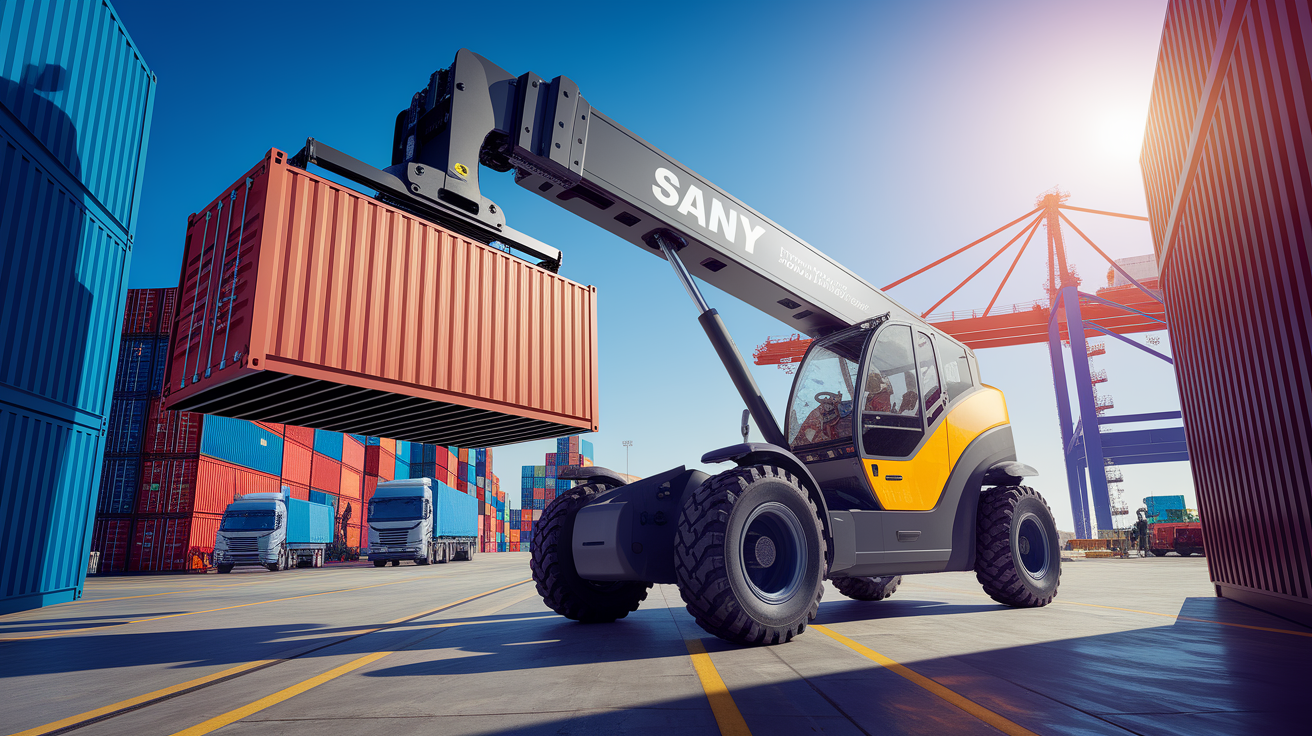
New Electric Sany Reach Stacker Gets to Work at Houston Terminal
Houston’s Port Powers Up With Heavy-Duty Electrification
The Port of Houston has taken a decisive step into the future of cargo handling, deploying its first SANY 50-ton electric reach stacker at Houston Terminal. This machine isn’t just another piece of equipment—it’s a signal that high-capacity, fully electric port machinery is ready for prime time. According to Equipment Depot, which supplied the unit, it’s the beginning of a planned fleet transition that could see multiple electric stackers working the docks in the coming years.
High-Voltage Muscle: Specs and Capabilities
Launched earlier this year, the SANY SRSC45E reach stacker is engineered for the toughest port jobs while slashing emissions and operating costs. The machine’s headline feature is its 512 kWh swappable battery pack, part of SANY’s broader electric ecosystem. Operators can either fast-charge via dual DC ports or swap the pack in minutes—keeping downtime to a minimum.
- Battery: 512 kWh, swappable, DC fast-charge capable
- Energy Recovery: KERS-style regenerative braking integrated into boom operation
- Max Load Capacity: 50 metric tons
- Top Speed: 20 km/h
- Noise Level: Significantly reduced compared to diesel models
- Maintenance: Minimal—primarily tire upkeep
The regenerative braking system is a standout innovation, converting gravitational energy from lowering loads into usable electricity. This not only boosts efficiency but also extends battery life between charges.
Houston’s Roadmap to Cleaner Ports
The acquisition was made possible through the Texas Emissions Reduction Plan (TERP) under its Seaport and Rail Yard Areas Emissions Reduction (SPRY) Program. The grant supports replacing older, high-emission equipment with cleaner alternatives. As per Port of Houston officials, the terminal intends to apply for another TERP grant to purchase a second electric stacker by 2026.
Industry leaders emphasize that this shift isn’t purely regulatory. Chad Larson, VP of Heavy Trucks and Port Equipment at Equipment Depot, noted that global market forces—especially partnerships with European and Asian companies—are pushing US ports toward zero-carbon machinery faster than domestic policy alone might dictate.
Shifting Industry Currents
The Houston deployment aligns with a broader global trend: electric equipment in ports is moving from pilot programs to operational mainstays. According to Port Technology, the combination of lower maintenance, fuel savings, and environmental benefits is proving irresistible to operators under pressure to modernize.
The SANY reach stacker’s design sets a new benchmark for heavy port machinery, showing that high-capacity lifting and sustainability can coexist. By integrating advanced battery systems with regenerative energy capture, it challenges the long-held assumption that diesel is the only viable option in high-load port environments.
Beyond the Docks: Why It Matters
For gearheads and industry insiders, the Houston Terminal project is a glimpse into the next chapter of industrial electrification. These machines are not just about compliance—they’re about redefining operational efficiency, cutting lifetime costs, and meeting the demands of an increasingly eco-conscious global trade network.
With more units planned and grants lined up, Houston Terminal is positioning itself as a leader in clean port operations. If the SANY stacker performs as expected, it could accelerate adoption across other US ports, setting a precedent that heavy-duty electric equipment is ready to shoulder the load.
Leave a Reply