Unlocking Performance: the Critical Role of Piston Shape in Engine Efficiency
The Power of Piston Design
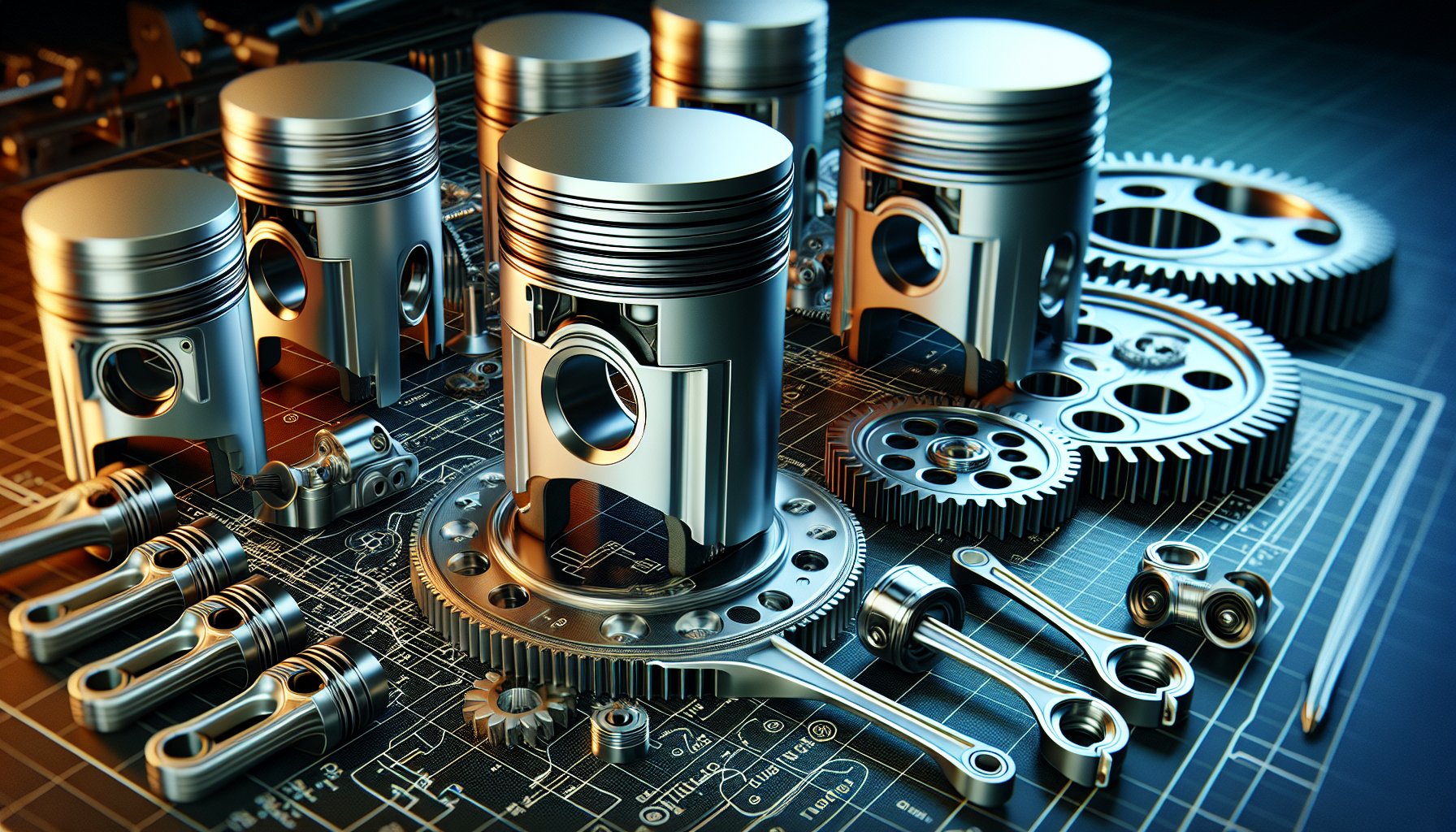
Piston shape plays a pivotal role in determining engine performance and efficiency. With configurations ranging from flat-top to domed and dished, each design brings unique advantages and challenges. Flat-top pistons are known for their optimal combustion efficiency in naturally aspirated engines, providing a balanced burn quality that maximizes power output.
Conversely, domed pistons, like those found in the Dodge Hemi, can elevate compression ratios to impressive levels, reaching as high as 12:1. This boost in compression translates to increased horsepower but requires careful engineering to avoid issues such as slow flame propagation and potential valve contact failures. Dished pistons lower compression ratios to around 8-9:1, making them ideal for turbocharged applications where high volumetric efficiency is crucial.
Understanding Combustion Dynamics
The crown shape of a piston significantly influences combustion dynamics. Factors such as flame propagation, swirl, and tumble are all affected by piston design. A well-designed piston maximizes quench area and facilitates better fuel-air mixing, which is essential for efficient combustion.
Modern advancements in direct injection and higher octane fuels have shifted preferences toward near-flat piston designs. These configurations allow for better valve clearance and reduced weight while also enhancing durability. For instance, aluminum pistons are gaining traction due to their 30-40% lighter weight compared to steel, improving fuel efficiency without sacrificing strength.
Market Trends and Innovations
The global piston market was valued at USD 2.49 billion in 2023 and is projected to reach USD 3.37 billion by 2030, driven by the demand for high-efficiency pistons in turbocharged engines. Innovations such as integrated cooling galleries and lightweight materials are shaping the future of piston design, particularly in downsized turbo-GDI engines.
As revealed by recent studies, optimized piston bowls can enhance combustion efficiency by 4-6% and reduce emissions by up to 15%. The industry is moving towards steel-hybrid pistons capable of withstanding pressures over 250 bar, further pushing the envelope of performance and efficiency.
Real-World Applications and Recommendations
Specific applications illustrate how piston shape directly impacts performance outcomes. For instance, the Dodge Hemi 5.7L engine utilizes domed pistons to achieve 395 hp and improved highway efficiency. On the other hand, turbocharged engines like Toyota’s 2.0L Dynamic Force leverage near-flat pistons to maximize thermal efficiency, hitting an impressive 40%.
Experts recommend different piston configurations based on the intended use. For street engines, flat-top designs are ideal, balancing efficiency and performance. Dished pistons are suggested for applications exceeding 20 psi of boost to mitigate the risk of pre-ignition or detonation.
Conclusion
Understanding piston shapes is essential for optimizing engine performance. As the industry continues to evolve, selecting the right piston design will remain a critical factor for manufacturers and enthusiasts alike. With ongoing advancements in materials and technology, the future of piston design promises exciting possibilities for enhanced engine capabilities.
Leave a Reply