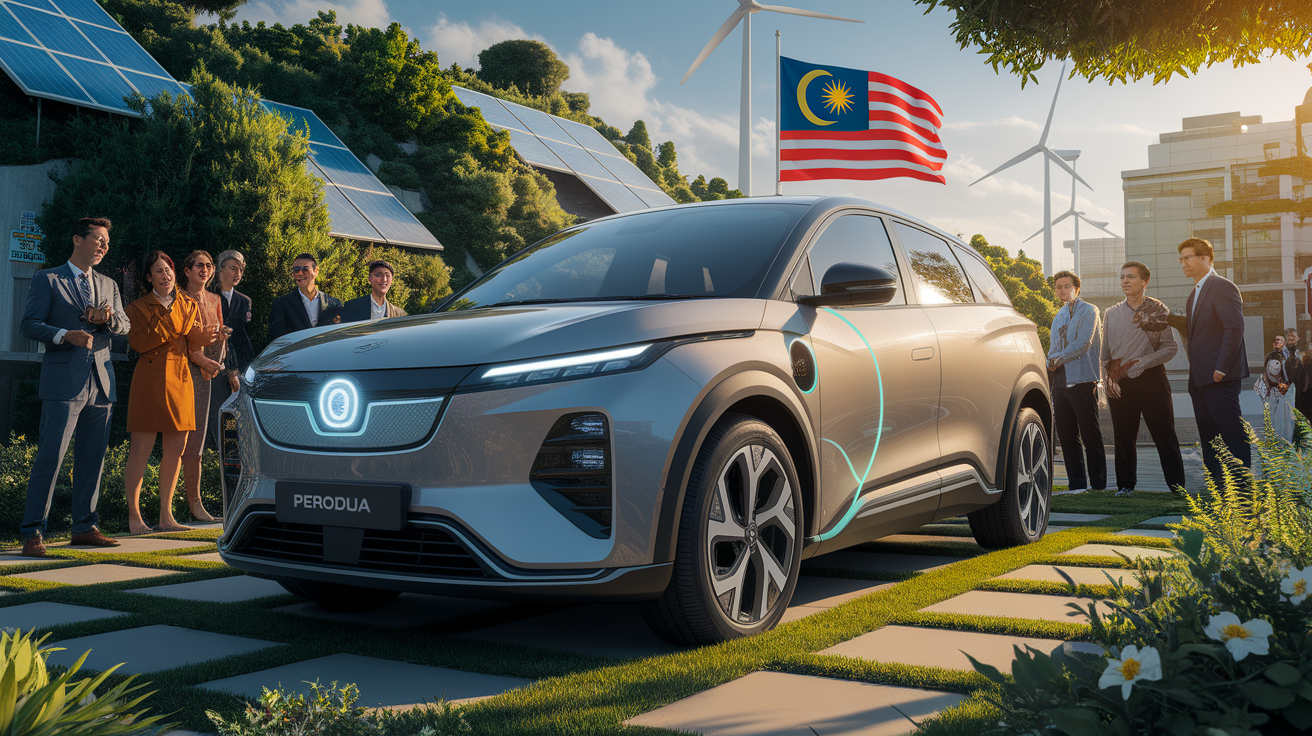
Revolution on Wheels: Perodua Unveils Malaysia’s First Homegrown Electric Vehicle
In a significant leap for Malaysia’s automotive industry, Perodua has launched the QV-E, the nation’s first fully homegrown electric vehicle (EV). This ambitious project, backed by a hefty investment of 800 million ringgit (approximately 167 million euros), represents a pivotal moment in Malaysia’s drive towards sustainable mobility.
Innovative Design and Specifications
The QV-E is a B-segment coupe-styled SUV that showcases a new platform co-developed with Magna Steyr, marking a departure from Perodua’s traditional reliance on Daihatsu platforms. Here are some key specifications:
- Powertrain: 150 kW permanent magnet synchronous motor delivering 285 Nm of torque.
- Battery: 52.5 kWh lithium iron phosphate (LFP) battery from CATL.
- Range: Up to 370 kilometers under WLTP standards.
- Acceleration: 0 to 100 km/h in just 7.5 seconds.
- Charging capabilities: 6.6 kW AC and 60 kW DC fast charging.
- Dimensions: 4.17 m (length) x 1.8 m (width) x 1.5 m (height) with a 2.68 m wheelbase.
Additionally, the QV-E offers vehicle-to-load (V2L) functionality, allowing it to power other devices, a feature not commonly found in entry-level SUVs.
Government Support and Local Manufacturing
The launch of the QV-E is a direct result of Malaysia’s ‘New Industrial Master Plan 2030,’ which aims to establish a robust domestic EV ecosystem. According to the plan, Perodua was appointed to lead the development of a fully homegrown electric vehicle by 2025. This initiative aims to:
- Accelerate Malaysia’s transition to sustainable mobility.
- Reduce dependence on imported EV technology.
- Target 50% localization in EV manufacturing by 2026 and 70% by 2030.
The QV-E is manufactured at Perodua’s plant in Sungai Choh, Selangor, with the company currently sourcing components from 52 local suppliers. This number is expected to rise to 70 by 2030, supporting the local automotive industry and creating jobs.
Market Positioning and Consumer Options
The QV-E is priced at 80,000 ringgit (excluding insurance) and is offered exclusively under a Battery-as-a-Service (BaaS) model, with a monthly battery rental fee of 297 ringgit. This approach aims to make electric mobility more accessible to Malaysian consumers, although it has sparked discussions about overall cost-effectiveness compared to traditional ownership models.
In the competitive landscape, the QV-E will face off against models like Proton’s e.Mas 5, which offers a smaller battery and shorter range at a lower price point. Perodua’s strategy focuses on safety and advanced technology, featuring a suite of driver assistance systems and a 10.25-inch touchscreen with wireless connectivity options.
Looking Ahead: The Future of EVs in Malaysia
The QV-E’s launch is not just about introducing a new vehicle; it represents a broader commitment to the future of sustainable transportation in Malaysia. As the government and Perodua work together to cultivate an electric vehicle ecosystem, the success of the QV-E will be a critical indicator of consumer acceptance and the viability of local EV production.
With strong governmental backing and a well-established brand like Perodua leading the charge, Malaysia is poised to become a significant player in the electric vehicle market. The QV-E is more than just a vehicle; it is a symbol of national ambition and a testament to the potential of homegrown innovation in the automotive sector.
Leave a Reply