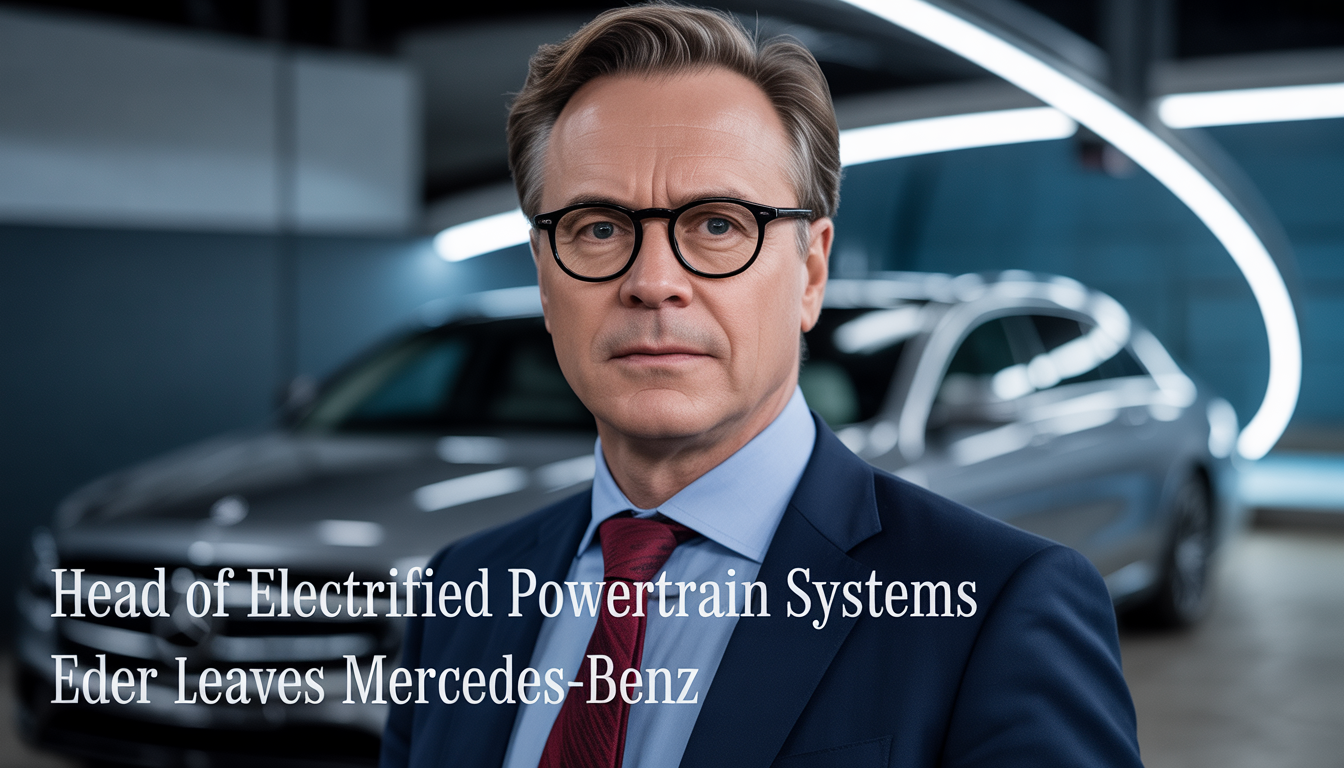
In a significant shake-up at Mercedes-Benz, Torsten Eder, the Head of Electrified Powertrain Systems, has announced his departure from the company effective May 1, 2026. Eder’s exit, confirmed by the automaker, comes at his own request, with no reasons disclosed or future plans revealed.
Leadership Transition at Mercedes-Benz
Eder’s role was pivotal in shaping the company’s electrification strategy since he took on the position in mid-2023. His contributions were recognized by CEO Ola Källenius, who emphasized Eder’s impact on technological excellence within the organization. To ensure continuity, Jörg Bartels, currently serving as President & CEO of Beijing Benz Automotive (BBAC), will succeed Eder in steering the development of electrified powertrains.
In a domino effect of leadership changes, Jens Bühler, Head of Production Kecskemét in Hungary, will take over Bartels’ previous role. This strategic reshuffle is part of a broader effort to enhance Mercedes-Benz’s focus on electric vehicle technology and operational efficiency.
Advancements in Electrified Powertrains
During Eder’s tenure, Mercedes-Benz made considerable strides in electrification. The company rolled out the Electric Drive Unit 2.0 (EDU 2.0), which features:
- 800V architecture for faster charging and improved performance
- Silicon carbide inverters enhancing energy efficiency
- High-performance motors delivering up to 200 kW
Production facilities in Untertürkheim, Hamburg, and Berlin have been revamped to support these advancements, ensuring that upcoming EQ models are equipped with cutting-edge technology. This retooling represents an investment in the mid-single-digit billion euros, underscoring Mercedes-Benz’s commitment to leading in the electrified vehicle market.
Context and Future Implications
Eder’s departure is set against a backdrop of significant management changes within the company, including the exit of long-time Chief Designer Gorden Wagener. These transitions highlight a strategic pivot towards a more agile and efficient organization, aimed at meeting the evolving demands of the automotive market and reinforcing Mercedes-Benz’s position in the global transition to electrification.
As Mercedes-Benz targets a goal of over 30% electrified vehicle share by 2027, the leadership shifts come at a crucial time. The company is investing heavily in dedicated EV platforms and advanced software systems, positioning itself for a competitive edge in the rapidly evolving automotive landscape.
With Eder’s legacy of innovation and the upcoming leadership changes, Mercedes-Benz is set to navigate its electrified future with renewed focus and ambition.
Leave a Reply