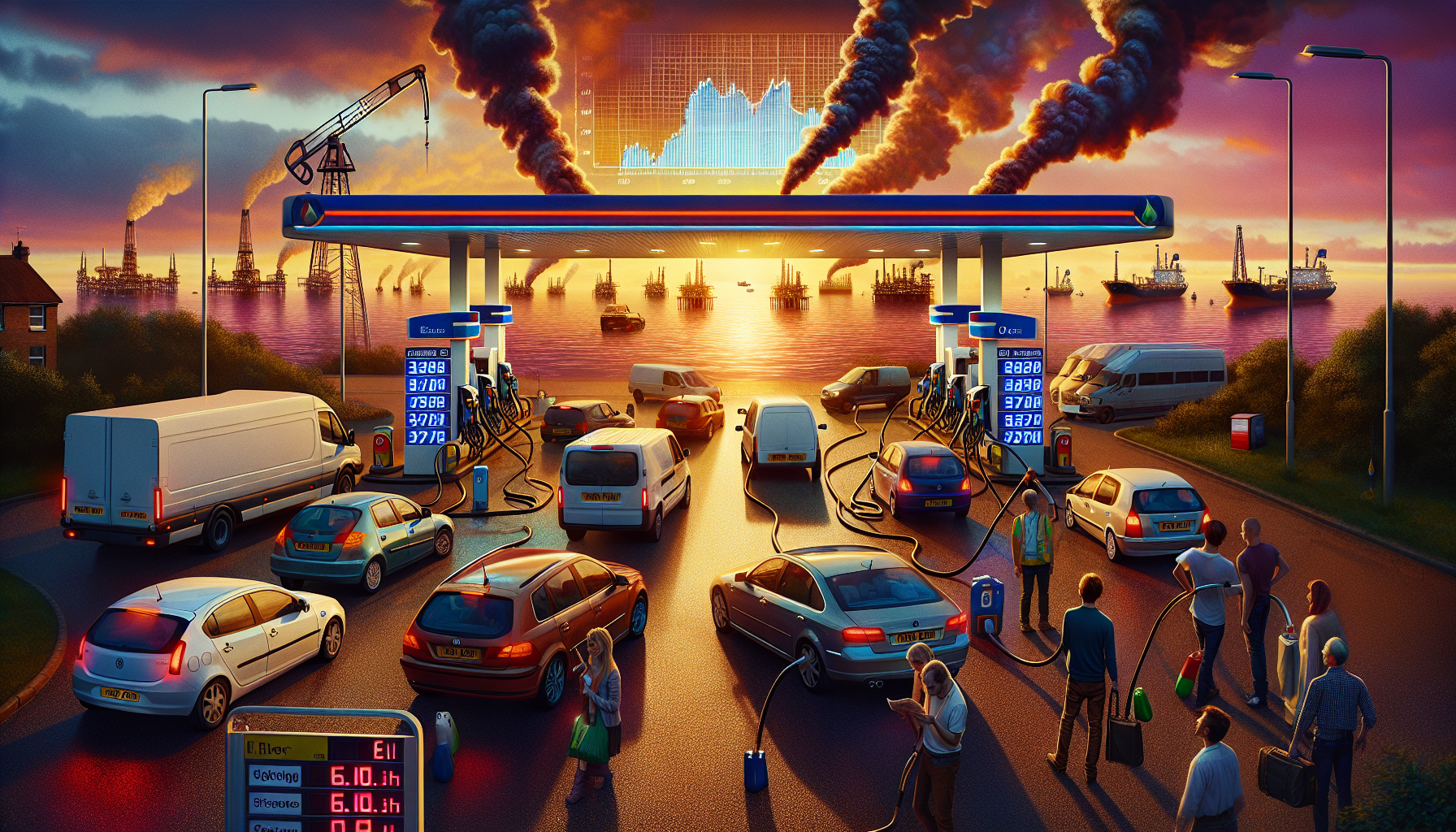
Shifting Sands: Will the Iran Conflict Drive up Petrol Prices in the UK?
The Rising Tide of Oil Prices
The ongoing conflict in Iran has sent shockwaves through the global oil market, with Brent crude prices soaring from $73 to $80 per barrel in just a few days. This spike, representing a 9.6% increase, marks the highest price point since the U.S. military strikes on Iranian nuclear sites in June 2025. As tensions escalate in the Strait of Hormuz, a critical artery for oil transport, UK petrol prices are poised for a potential rise, leaving motorists bracing for impact.
Currently, UK petrol prices average 134 pence per litre, reflecting a modest uptick of 1 penny since February. Analysts, including Simon Williams from the RAC, predict an increase to 136 pence if oil prices stabilize around $80. For drivers, this translates to an additional £1 per 50-litre fill-up. If prices climb further to $90, the average price could reach 140 pence, pushing costs up by over £2 per fill-up.
Historical Context and Current Trends
To understand the potential impact of the Iran conflict on UK petrol prices, it’s essential to consider historical precedents. In 2022, the onset of the Ukraine war sent oil prices soaring to unprecedented levels, with Brent crude hitting $119 per barrel. This surge propelled UK petrol prices to an eye-watering 191 pence per litre, costing drivers an additional £31 per tank. In contrast, current prices remain significantly lower, suggesting that while the situation in Iran could escalate, the immediate impact may be mitigated.
Experts caution against drawing direct parallels between the current conflict and past oil crises. The market is more resilient today, with global spare capacity from OPEC+ providing a buffer against sudden shocks. According to the International Energy Agency, OPEC+ holds around 5.5 million barrels per day in spare capacity, which could help stabilize prices if tensions continue to rise.
What Lies Ahead for UK Drivers?
As the situation unfolds, UK drivers might consider taking proactive measures. Simon Williams advises filling up now to avoid potential price hikes, as the average price is expected to increase. Additionally, diversifying into fuel-efficient hybrids, such as the Toyota Prius, could save drivers significant amounts—averaging around £500 per year compared to traditional petrol vehicles.
From a policy perspective, the UK government is urged to utilize its strategic reserve if petrol prices exceed 140 pence per litre. With the nation importing approximately 40% of its petrol from refined Brent crude, maintaining a buffer is crucial. Industry leaders like BP recommend closely monitoring OPEC+ production cuts, which have already reduced output by 2 million barrels per day since 2025.
Conclusion: A New Era of Energy
The conflict in Iran certainly poses a risk to petrol prices in the UK, but it also highlights the evolving landscape of energy consumption. With UK electric vehicle sales reaching 25% of the market share in early 2026, the demand for petrol is expected to decline by 15% since 2024. This shift towards electrification, coupled with increased domestic oil production, suggests that while tensions in the Middle East remain a concern, the UK is gradually insulating itself from such global disruptions.
Leave a Reply