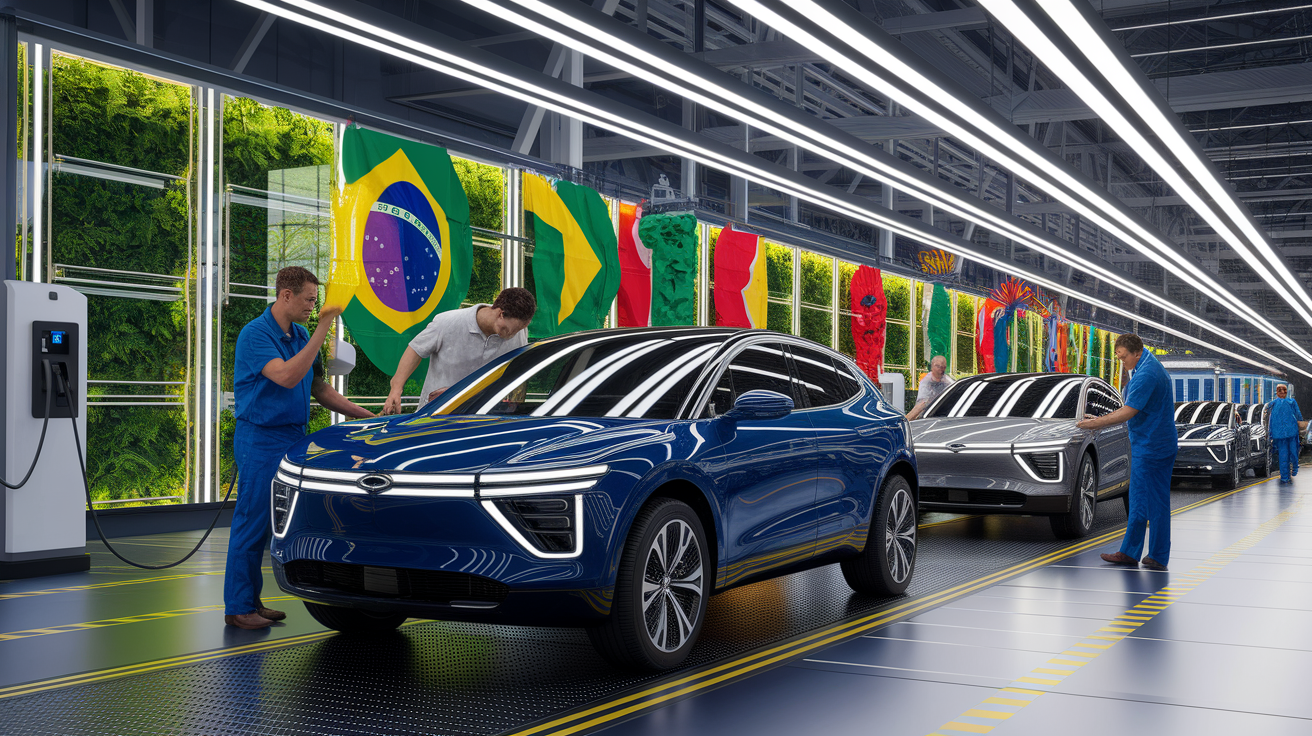
GM Accelerates EV Revolution With New Production Plant in Brazil
General Motors (GM) has officially entered the electric vehicle (EV) arena in Brazil, launching production at its newly repurposed facility in Ceará. This strategic move marks a significant pivot for GM in one of South America’s largest automotive markets, emphasizing a commitment to sustainability and innovation.
Production Launch: The Chevrolet Spark EUV
The first model to roll off the assembly line is the Chevrolet Spark EUV, an electric SUV developed in collaboration with the Chinese joint venture SAIC-GM-Wuling. This vehicle is based on the Baojun Yep Plus and has been tailored to meet the demands of urban consumers looking for compact, stylish, and environmentally friendly transportation.
- Model: Chevrolet Spark EUV
- Type: Electric SUV
- Development: SAIC-GM-Wuling
- Foundation: Baojun Yep Plus
In addition to the Spark EUV, GM plans to commence production of the Chevrolet Captiva EV in 2026, further expanding its electric lineup. The Captiva EV is set to provide a mid-sized SUV option for consumers, echoing the design of the Wuling Starlight S.
Investment and Industrial Strategy
This production launch is backed by GM’s substantial investment of 7 billion reais (approximately 1.1 billion euros) aimed at electrifying operations in Brazil. This funding is crucial for retrofitting the former Troller factory, enhancing its capabilities to manufacture battery-electric vehicles.
The initiative aligns with Brazil’s industrial revival and supports government programs like the Mover program, which promotes energy-efficient technologies and provides tax incentives for low-emission vehicles. Santiago Chamorro, President of GM South America, emphasized that this move is pivotal for fostering competitiveness and technological advancement within Brazil’s domestic automotive industry.
Market Implications and Government Support
The Brazilian government is actively supporting this transition to electric mobility, leveraging the nation’s renewable energy resources, with over 53% of its electricity coming from green sources. This facilitates a smoother shift towards electric vehicles. The Mover program is expected to further encourage investments in energy-efficient technologies and recycling standards.
GM’s entry into electric vehicle production not only reflects the company’s adaptability but also signifies renewed confidence in Brazil’s potential as a regional hub for electric mobility. The successful launch of the Spark EUV and the upcoming Captiva EV could set a precedent for other manufacturers looking to invest in sustainable automotive solutions in South America.
Historical Context: GM’s Legacy in Brazil
With nearly a century of presence in Brazil, producing upwards of 20 million vehicles since its inception in 1925, GM has consistently evolved alongside the country’s industrial landscape. The transition to electric vehicle production is a natural progression in GM’s long history, showcasing its commitment to innovation and environmental stewardship.
As GM continues to adapt to changing market demands, the production of the Spark EUV and Captiva EV represents not just a new chapter for the company, but a significant step forward for Brazil’s automotive industry in the global transition to electrification.
Leave a Reply