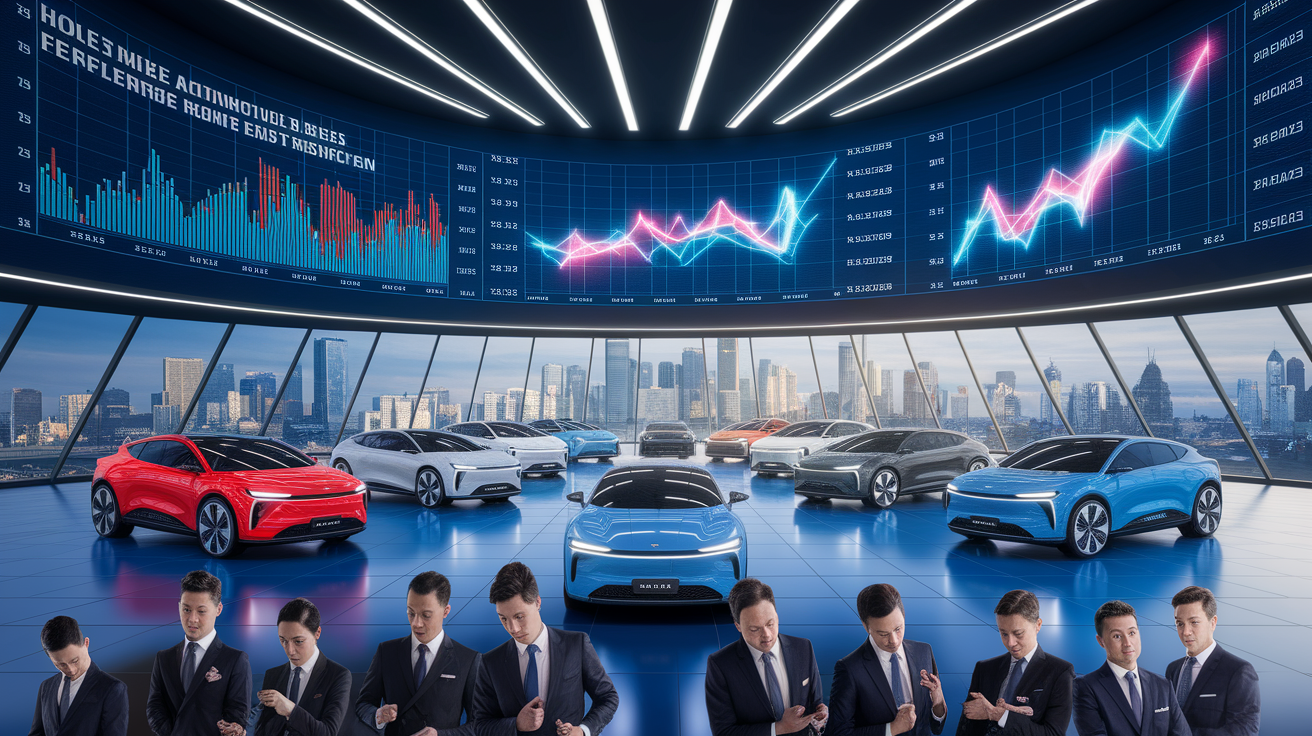
Breaking the Mold: Geely VP Critiques China’s Automotive Copycat Culture
The Chinese automotive landscape is facing a creative stagnation, warns Chen Zheng, Vice President and Global Head of Design at Geely. He highlights a concerning trend where manufacturers are merely imitating successful designs rather than innovating, leading to a homogenized fleet of new energy vehicles (NEVs). This lack of originality is not just an aesthetic issue; it’s a significant hurdle for brands striving to stand out in an increasingly crowded market.
Design Trends Under Fire
According to Chen, the industry is rife with repetitive elements that dilute brand identity. Common design features have emerged, including:
- Through-type headlight strips
- Roof-mounted lidars
- Hidden door handles
- Standardized cockpit layouts featuring small instrument panels and large central screens
This saturation of similar designs makes it difficult for consumers to distinguish between different automakers. Models like the Changan Nevo A06 and Arcfox T1 exemplify this trend, showcasing features that are becoming nearly universal across the market.
Consequences of Imitation
The ramifications of this design homogeneity are profound. Even as NEV sales are booming—Geely reported 339,000 units sold in Q1 2025 with over 50% domestic market penetration—many vehicles lack the unique attributes that consumers crave. The reliance on shared parts and technologies, like Huawei’s Qiankun ADS, drives down differentiation, leaving manufacturers to compete primarily on price rather than innovation.
Plagiarism and Intellectual Property Issues
The trend of imitation has led to rampant accusations of design theft within the industry. For instance, IM Motors has accused Dongfeng of copying its IM L7 design for the Forthing Xinghai S7. This raises significant concerns about intellectual property enforcement, which remains weak in China. As noted by industry insiders, many automakers are opting for quick, cost-effective solutions rather than investing in genuine innovation.
Lu Fang, Chairman of Voyah, echoed these sentiments, calling the current competitive landscape an illusion of innovation, where many companies prioritize short-term gains over long-term growth and user satisfaction.
Industry Involution and Market Implications
The phenomenon of ‘involution’—characterized by intense internal competition leading to price wars—has further complicated the situation. The China Association of Automobile Manufacturers has reported that this fierce competition is damaging profitability across the board. In response, companies like Geely and Changan are stabilizing prices to combat this disorderly market environment, yet the push for true innovation remains a distant goal.
As the market shifts from subsidy-driven growth to a more competitive landscape, the pressure is on Chinese manufacturers to innovate or risk becoming irrelevant. Geely aims for an ambitious 5 million annual sales target by 2027, leveraging advanced technologies like G-pilot ADAS to differentiate itself in a market flooded with imitation.
Ultimately, the future of the Chinese automotive industry hinges on its ability to break free from these cycles of imitation and truly innovate. As consumers become more discerning, manufacturers must shift their focus from replication to originality to capture the hearts and minds of the next generation of car buyers.
Leave a Reply