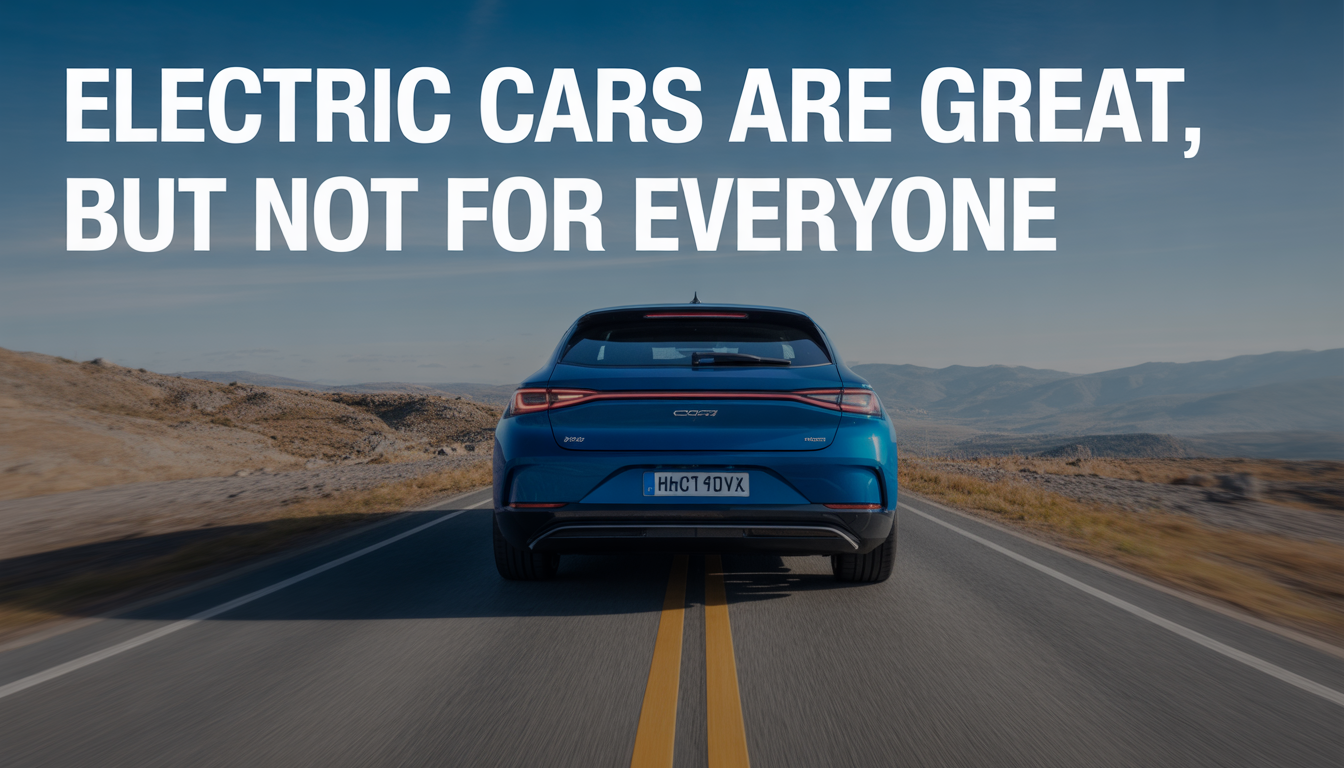
The Electric Revolution: Who Really Benefits?
Electric vehicles (EVs) are touted as the future of transportation, promising to reduce emissions and revolutionize the driving experience. However, as the market expands, it becomes evident that these vehicles cater to a specific demographic. While they offer significant benefits, they may not be the best choice for every driver.
Advantages of EVs
EVs come with a suite of compelling advantages, including:
- Zero tailpipe emissions: Contributing to improved air quality.
- Instant torque: Providing responsive and thrilling acceleration.
- Quiet operation: Fewer moving parts lead to a quieter drive.
- Lower maintenance costs: No oil changes or complex transmissions required.
- High energy efficiency: Converting 87-91% of battery energy to motion, significantly more than traditional gasoline vehicles.
These features make EVs particularly appealing to urban commuters and environmentally conscious drivers.
Limitations and Challenges
Despite the benefits, EVs are not without their drawbacks. Key limitations include:
- Limited driving range: Most EVs can only travel 200-300 miles per charge.
- Prolonged charging times: Ranging from 20 minutes to several hours.
- Higher upfront costs: The price tag for EVs is often steeper due to expensive battery packs.
- Battery degradation: Cold weather can reduce range, and batteries lose efficiency over time.
- Charging infrastructure issues: Public charging stations are less ubiquitous than gas stations and often come with high costs.
These challenges highlight why EVs may not suit everyone, particularly long-distance travelers and those living in areas with inadequate charging facilities.
Who Should Consider EVs?
EVs are ideal for specific types of drivers:
- Urban commuters with access to home charging.
- Those who drive less than 200 miles daily.
- Individuals eligible for government incentives, which can offset high initial costs.
For others, especially those in rural areas or without dedicated parking, hybrids present a more flexible alternative. They offer improved fuel efficiency without the need for charging infrastructure, making them a practical choice.
Policy and Market Dynamics
The push for EV adoption is also shaped by policy changes. For instance, governments across Europe are promoting EVs through bans on new internal combustion engine (ICE) sales. However, these policies face pushback due to public concern over infrastructure and costs. Delays in implementing bans, like the potential postponement of the EU’s 2035 ban, reflect ongoing debates about how quickly the market can adapt.
As the automotive landscape evolves, it’s clear that while EVs are a significant step towards sustainability, they are not a one-size-fits-all solution. Understanding the unique needs of different drivers is crucial as the industry navigates this transition.
Leave a Reply