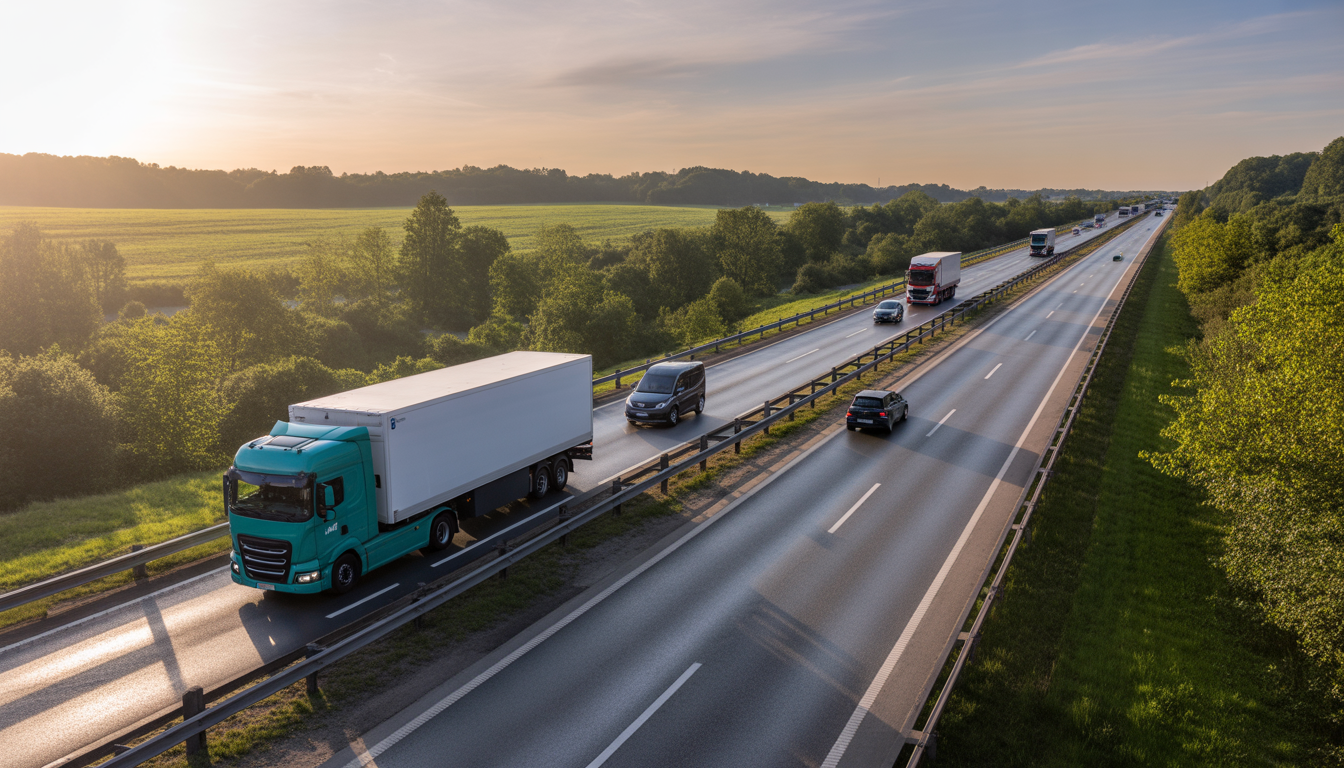
Germany’s Motorways Get the Green Light for E-Truck Charging Revolution
The European Commission has officially approved a transformative €1.6 billion subsidy scheme aimed at bolstering the charging infrastructure for electric heavy-duty vehicles (e-HDVs) along German motorways. This initiative will see the establishment of fast-charging stations at over 120 unmanaged rest areas, paving the way for a sustainable future in road freight.
Key Details of the Charging Initiative
Under this plan, Germany will deploy up to 1,410 charging points equipped with high-capacity chargers, including at least 400 kW for CCS points and 1,000 kW for MCS points. The tender for the first batch of 130 sites was issued in September 2024, strategically segmented into five lots of approximately 25 locations each. This approach addresses critical market gaps where private investment alone would not suffice, ensuring that public support plays a pivotal role.
Alignment with EU Environmental Goals
This project is not just a technical upgrade; it aligns closely with the EU’s ambitious ‘Fit for 55’ package, which aims for a 55% reduction in greenhouse gas emissions by 2030. Additionally, it adheres to the Alternative Fuels Infrastructure Regulation (AFIR), emphasizing the need for extensive charging networks for zero-emission heavy-duty vehicles across Europe.
Current State of E-Truck Charging Infrastructure
Germany currently leads the charge in electric vehicle infrastructure with over 28,000 DC fast-charging stations. However, the dedicated infrastructure for e-trucks remains limited. Recent efforts include Milence’s €500 million investment to establish 1,700 stations across seven European countries by 2027, and a collaboration between E.ON and MAN to develop 400 charging points at 170 sites.
Technical Specifications and Future Prospects
The new charging hubs will support high-power CCS and MCS points, enabling e-trucks to recharge in just 30-45 minutes during rest periods. This initiative complements existing networks, with a vision to have a total of 350 sites operational by 2024, combining both managed and unmanaged locations.
Impact on the Automotive Industry
The initiative is poised to accelerate the decarbonization of the road freight sector in Germany, facilitating the broader adoption of electric heavy-duty vehicles. As Teresa Ribera, Executive Vice-President for Clean, Just and Competitive Transition, noted, this scheme will significantly contribute to the automotive industry’s transition to sustainable mobility.
By addressing infrastructure bottlenecks, the project not only meets the current demand for electric trucks but also sets a precedent for other EU member states to follow. As the automotive landscape shifts towards electrification, this approval marks a pivotal moment in the drive for cleaner transportation.
Leave a Reply