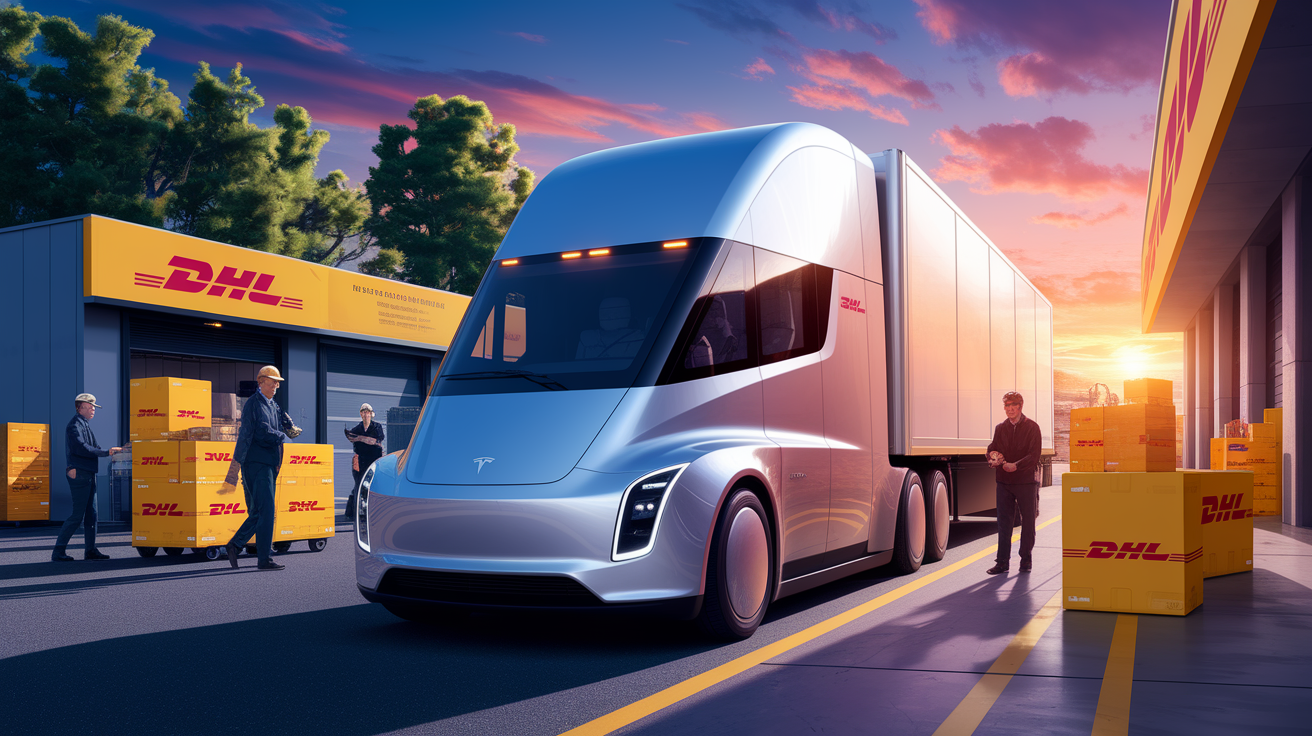
DHL Takes Delivery of Its First Tesla Semi Electric Truck, Says More to Come Next Year
DHL Supply Chain has officially entered the electric trucking revolution with the delivery of its first Tesla Semi, an all-electric Class 8 heavy-duty truck. This milestone not only marks a significant advancement in the logistics giant’s sustainability efforts but also sets a precedent for the adoption of electric vehicles (EVs) in long-haul freight operations.
Performance Metrics That Challenge Skepticism
The Tesla Semi, which recently completed a successful pilot program in Livermore, California, has proven its mettle, completing over 3,000 miles on real-world routes. During testing, the truck demonstrated an impressive energy consumption rate of approximately 1.72 kWh per mile while hauling a gross combined weight of 75,000 pounds (34 metric tons) over a 390-mile route. This performance surpasses Tesla’s initial promise of less than 2 kWh per mile, even under full load conditions, showcasing its operational efficiency.
With a range of up to 500 miles on a single charge, the Tesla Semi allows DHL to run daily routes averaging about 100 miles with only one charge needed per week. This translates into significant fuel cost savings, estimated at $0.20 to $0.25 per mile, compared to $0.60 to $0.80 per mile for traditional diesel trucks, reinforcing the economic advantages of electric heavy-duty trucking.
Strategic Integration into DHL’s Operations
DHL’s adoption of the Tesla Semi aligns with its ambitious sustainability targets, which include reducing absolute CO₂ emissions to 29 million metric tons by 2030 and achieving net-zero emissions by 2050. The integration of this electric truck into their fleet positions DHL as a leader in sustainable freight transportation, setting a powerful example for other logistics companies to follow.
According to Jim Monkmeyer, President of Transportation at DHL Supply Chain North America, “Integrating the Tesla Semi into our fleet is an important step toward achieving our decarbonization goals and delivering more sustainable solutions for our customers.” This sentiment reflects a growing confidence in electric trucks’ capabilities for heavy-duty, long-distance logistics, challenging traditional industry skepticism.
Market Trends and Future Expansion
While Tesla initially planned to commence volume production of the Semi in 2025, the timeline has been pushed to 2026. Despite this delay, early adopters such as PepsiCo, Walmart, and Sysco, along with DHL, are integrating the Semi into their fleets. This trend indicates a rising market confidence in the operational viability of electric heavy-duty vehicles, supported by real-world performance data.
DHL has stated it plans to expand its fleet of Class 8 electric vehicles in North America, currently exceeding 150 units, with further additions of Tesla Semi trucks anticipated in 2026. The logistics industry is witnessing a pivotal shift towards electrification, and DHL’s proactive steps may catalyze broader adoption across the sector.
Broader Implications for the Logistics Industry
The deployment of Tesla Semis by major logistics companies like DHL signals a transformative shift in freight transportation towards electrification and sustainability. By demonstrating that electric trucks can efficiently handle heavy loads over long distances, Tesla and its partners are dismantling the diesel-dominated status quo.
This shift not only has the potential to significantly reduce greenhouse gas emissions from the transportation sector but also presents economic benefits through lower fuel and maintenance costs. As more companies invest in charging infrastructure and battery technology advancements, the logistics industry may experience a rapid transition towards sustainable practices.
Leave a Reply