China’s Export Licenses for Rare-Earth Magnets: a Game Changer for India’s Auto Industry
The Announcement
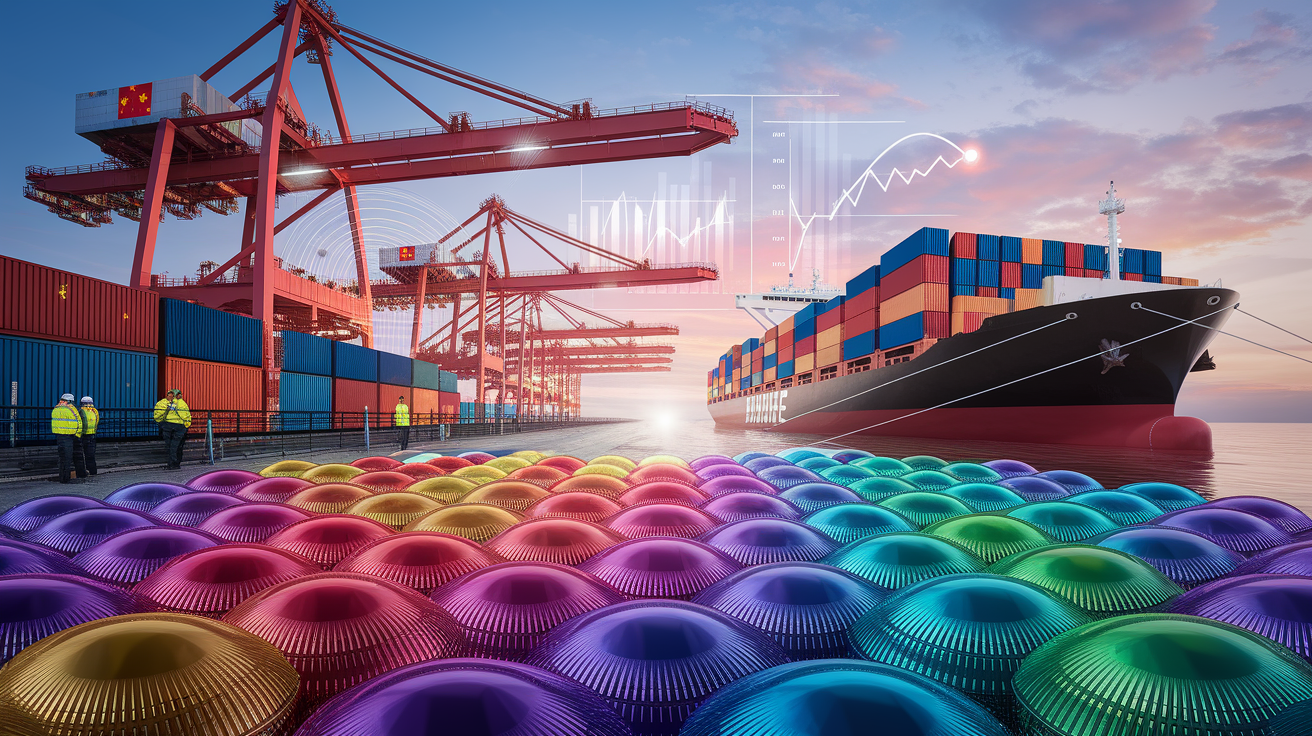
In a significant development for the automotive sector, China has started issuing export licenses for rare-earth magnets to select Indian companies. This move comes amidst ongoing trade tensions and supply chain issues, marking a pivotal moment for India’s burgeoning electric vehicle (EV) market.
Understanding Rare-Earth Magnets
Rare-earth magnets, particularly neodymium-iron-boron (NdFeB), are critical components in high-performance electric motors, wind turbines, and various electronic devices. Their strength and efficiency make them indispensable for modern technologies, especially in electric vehicles. India alone is projected to require approximately 870 tonnes of these magnets annually by 2025-26, underlining their importance as the country accelerates its transition to electric mobility.
China’s Dominance and Recent Changes
Holding over 90% of global rare-earth magnet production, China has long maintained a strategic advantage in this vital sector. Following the introduction of stringent export controls in April 2025, which required licenses and end-user certificates to ensure non-military use, many countries faced supply disruptions. However, as of October 2025, China began selectively approving licenses for Indian firms, including major players such as Mahindra, Maruti Suzuki, and Bosch, easing some of the pressure on India’s supply chain.
Despite this positive turn, more than 50 applications remain pending, suggesting that while the situation is improving, challenges persist.
India’s Response and Strategic Moves
Recognizing its heavy reliance on Chinese imports, India has committed ₹7,280 crore to establish a domestic rare-earth magnet production capacity of 6,000 tonnes. This initiative aims to bolster self-sufficiency in the EV and electronics sectors. Additionally, India is exploring partnerships with international firms and advancing research in magnet recycling to further reduce dependence on China.
However, achieving complete independence will take time due to technological hurdles and the complexities of raw material extraction.
Geopolitical Implications
This licensing decision reflects broader geopolitical dynamics, particularly U.S.-China trade tensions that are impacting global supply chains. For India, the easing of restrictions could mean a 20-30% increase in costs for manufacturers if delays continue. As the nation strives to enhance its EV infrastructure under initiatives like FAME-II, the urgency to diversify supply sources becomes even more critical.
In the long run, this scenario encourages global efforts to establish alternative supply chains, particularly in countries like Australia, the USA, and Vietnam.
As the automotive industry braces for a more competitive landscape, China’s recent licensing actions present both opportunities and challenges, shaping the future of electric mobility in India.
Leave a Reply