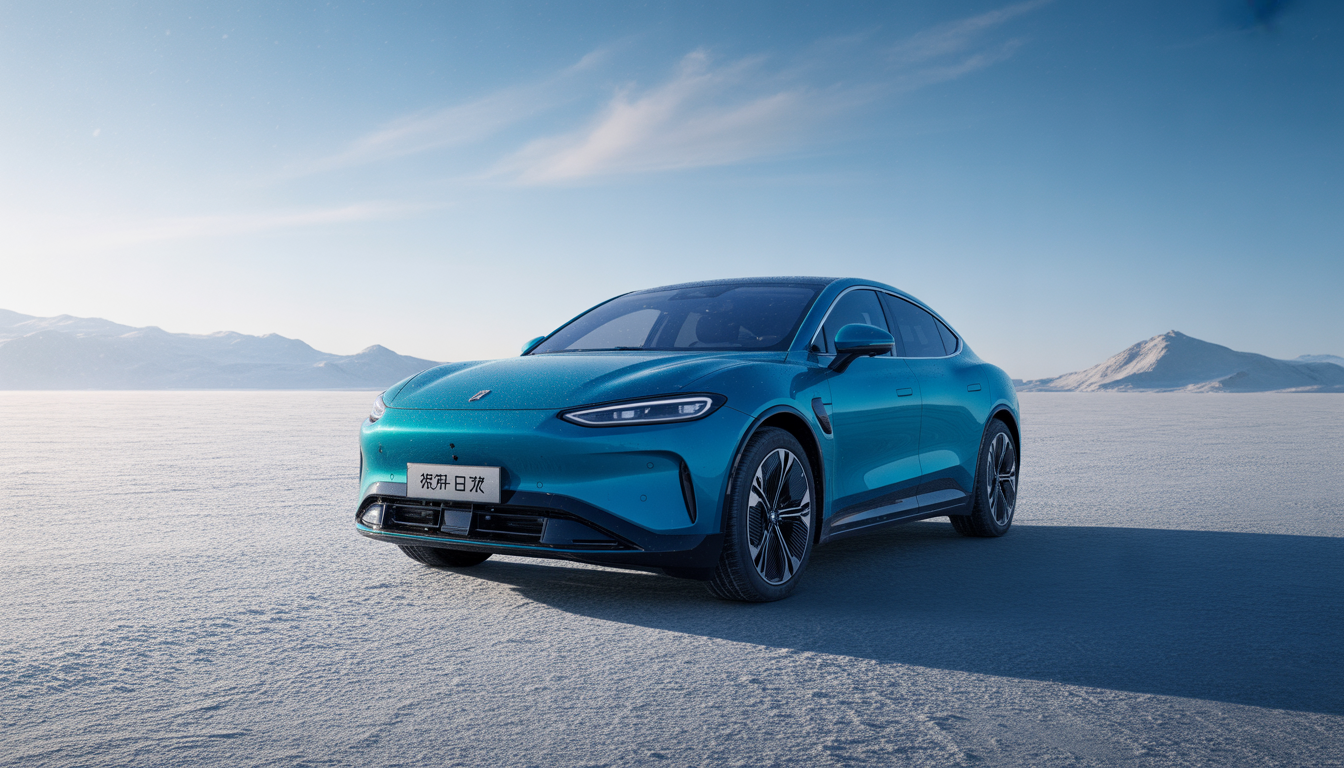
China’s Record-Breaking EV Winter Test: 67 Vehicles Face Arctic Conditions
The Test That Shook the EV World
In a groundbreaking event for electric vehicles (EVs), Autohome, China’s premier automotive media platform, conducted an unprecedented winter test in Yakeshi, Inner Mongolia. Spanning across temperatures from -10°C to an eye-watering -25°C, this massive test involved 67 vehicles and set a new Guinness World Record for the largest field winter car test.
Testing Under Extreme Conditions
The test was meticulously designed to assess various performance metrics across seven extreme scenarios:
- Range
- Energy consumption
- Fast charging
- Air conditioning efficiency
- Automatic emergency braking (AEB)
- Acceleration
- Off-road capabilities
Vehicles ranged from budget-friendly models priced at 60,000 yuan to luxury options exceeding 2 million yuan, showcasing the breadth of China’s EV market.
Standout Performers
Among the competitors, the Xpeng P7 (AWD) emerged as the leader in the range test, achieving 53.9% of its rated range, followed closely by the BYD Yangwang U7 at 51.8% and the Zeekr 001 at 49.6%. Surprisingly, the Tesla Model Y trailed at 31st place with just 35.2% of its rated range, while the Li Auto L8 finished last at 34.8% according to Car News China.
Energy consumption figures revealed that smaller hatchbacks excelled, with the BYD Seagull leading at 23.5 kWh/100 km.
Challenges of Winter Driving
Cold weather poses significant challenges for EVs, with battery efficiency diminishing drastically. Reports indicate that at -20°C, range could drop to 40% of normal levels. Charging times also extended, as lithium-ion batteries struggled to perform in sub-zero conditions. This reality raises concerns about the viability of EVs in northern regions of China, where market penetration remains significantly lower than in the south.
Innovations to Overcome Cold Challenges
In response to these challenges, advancements in battery technology are emerging. Solutions like lithium-titanate batteries, capable of operating in extreme conditions, are being implemented in northern electric buses. Additionally, enhanced thermal management systems, such as Huawei’s DriveOne in the Luxeed S7, have shown promise in reducing heat loss by 50%.
The Significance of Yakeshi
Yakeshi’s extreme climate makes it an ideal testing ground for EVs, allowing manufacturers to simulate real-world conditions. This test not only provided valuable insights into vehicle resilience but also highlighted the ongoing technological race in the EV sector.
The results from this comprehensive winter test could shape the future of electric mobility, particularly in cold climates. As the industry evolves, these insights will be crucial for manufacturers striving to enhance performance and consumer confidence.
Leave a Reply