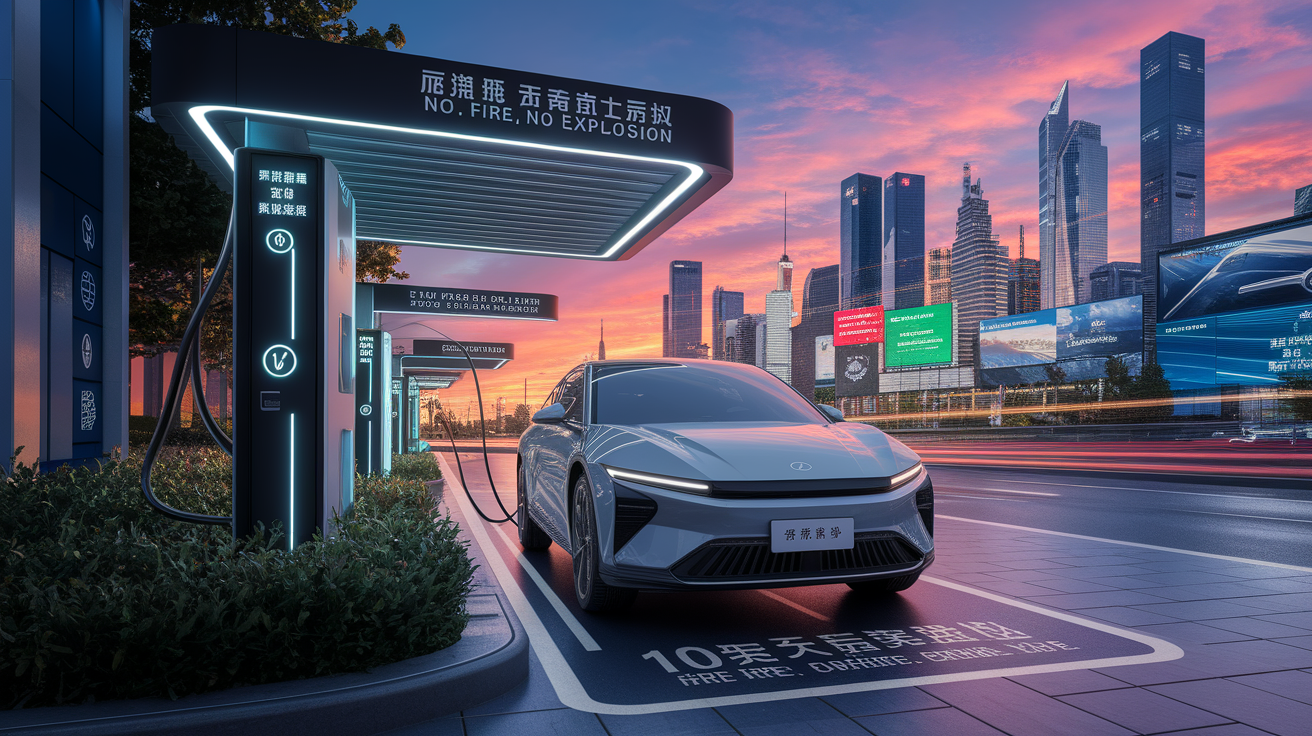
China Sets Groundbreaking EV Battery Safety Standards: “no Fire, No Explosion” Mandate
A Bold Step in EV Safety
China is raising the bar for electric vehicle (EV) safety with its newly mandated GB 38031-2025 standard, officially requiring that all EV batteries must not catch fire or explode under specific test conditions. Announced on December 26, 2025, by the State Administration for Market Regulation, this regulation is poised to take effect on July 1, 2026, for new approvals, with existing vehicles granted a transition period until July 1, 2027. This marks a pivotal moment in EV development, pushing manufacturers toward safer, more reliable battery designs.
Key Features of the Standard
The GB 38031-2025 standard introduces rigorous safety protocols including:
- Thermal Diffusion Testing: Enhanced testing criteria that assess battery performance under extreme temperatures.
- Impact Tests: New bottom impact tests to evaluate the structural integrity of battery packs during accidents.
- Fast-Charging Cycle Safety: Batteries must endure 300 fast-charging cycles followed by short-circuit testing without igniting.
- Extended Thermal Runaway Requirements: Batteries must withstand a two-hour period post-thermal runaway without any signs of ignition, a significant increase from previous standards.
These stringent requirements are designed to bolster the overall safety of new energy vehicles, urging automakers to optimize battery technology and thermal management systems.
Broader Implications for the Industry
This regulation is part of a larger initiative encompassing 294 national standards across 13 sectors aimed at promoting industrial upgrades and enhancing consumer safety. According to official sources, the focus on energy efficiency and product safety reflects China’s commitment to advancing its manufacturing capabilities while addressing environmental concerns.
China’s move to enforce these standards is also expected to influence global markets, setting a benchmark that could affect export requirements, particularly in terms of battery certification and packaging for international shipping. As noted by Battery Tech Online, compliance with these new standards could reshape how manufacturers approach EV battery design and manufacturing processes.
Industry Response and Compliance
Leading battery manufacturer CATL has already set the pace by becoming the first to achieve certification under these new standards for its Qilin battery cells. With this early compliance, CATL signals its commitment to innovation and safety in the EV sector. However, the mandate presents challenges for automakers who must adapt their existing battery structures and thermal systems to meet the new criteria.
The implications of these standards extend beyond just safety; they emphasize a critical shift towards sustainable practices in the automotive industry. As the EV landscape evolves, manufacturers must prioritize safety alongside performance, ensuring that advancements in technology do not compromise user safety.
Leave a Reply