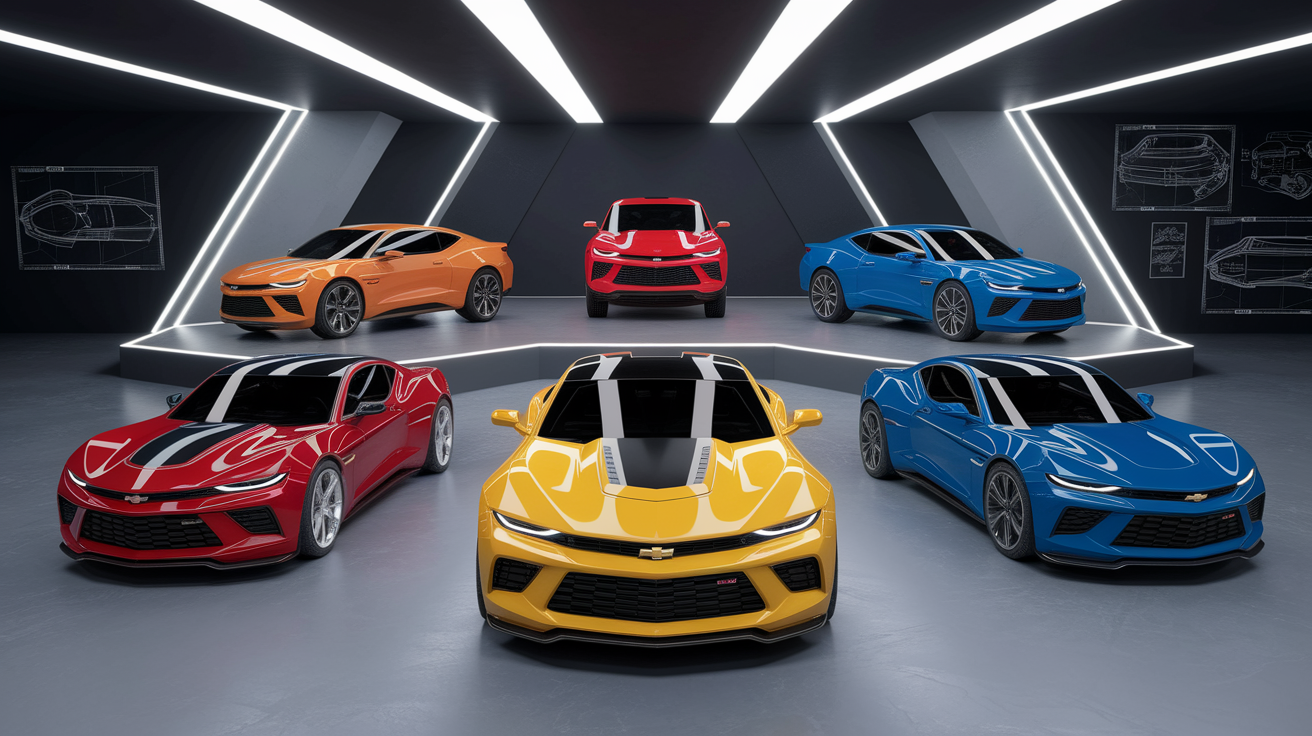
Chevrolet’s Dream Machines: Five Concept Cars That Never Hit the Streets
Throughout automotive history, concept cars have served as a window into what the future might hold, often showcasing groundbreaking designs and innovative technologies. Chevrolet, a brand synonymous with American automotive culture, boasts an impressive lineup of concepts that, while visionary, never transitioned into production. Here’s a look at five iconic Chevrolets that captured imaginations but ultimately remained dreams on wheels.
1963 Chevrolet Testudo: The European Touch for an American Classic
The 1963 Chevrolet Testudo was born from the desire to give the Corvair a European flair. General Motors aimed to enhance Chevrolet’s presence in Europe, but Vice President Bill Mitchell believed the Corvair lacked the necessary sophistication. To remedy this, two Corvair chassis were sent to the renowned Italian coachbuilders Pininfarina and Bertone. The latter, under the guidance of designer Giorgetto Giugiaro, created a remarkable Berlinetta-style coupe.
With a chassis shortened by 12 inches, the Testudo featured pop-out headlights and a striking fighter-jet-style canopy in lieu of traditional doors. It made its debut at the 1963 Geneva Motor Show, where it was met with widespread acclaim. However, as safety concerns about the Corvair grew—especially following Ralph Nader’s book “Unsafe at Any Speed”—the Testudo’s production prospects dwindled. Unfortunately, the Corvair ceased production in 1969, sealing the fate of this alluring concept.
1976 Chevrolet Aerovette: A Mid-Engine Corvette That Could Have Been
Fast forward to the mid-1970s, and we find the 1976 Chevrolet Aerovette, an audacious concept that hinted at a mid-engine Corvette. Initially presented in 1973 as the XP-882 and XP-987GT, this concept toyed with the idea of rotary Wankel engines—both a four-rotor and a two-rotor variant—during a time when fuel efficiency was paramount due to the Oil Crisis.
The Aerovette’s fiberglass body combined a low, elongated silhouette with gullwing doors, merging the aesthetics of European supercars with classic Corvette styling. By 1976, the rotary engines were swapped out for a robust 6.6-liter V8, but chief engineer Dave McLellan ultimately deemed the mid-engine design commercially unviable, leading to its cancellation. The Aerovette remains a tantalizing “what-if” in Corvette lore.
1987 Chevrolet Express Concept: A Glimpse into the Future
Imagined as a vehicle for the year 2015, the 1987 Chevrolet Express concept was a testament to Chevrolet’s forward-thinking vision. This gas-turbine-powered cruiser was designed for a high-speed highway network where vehicles could autonomously cruise at speeds exceeding 150 mph. Its kerosene-powered turbine engine produced about 120 horsepower and 350 lb-ft of torque.
Featuring an aerodynamic body and an innovative overhead canopy instead of doors, the Express was packed with advanced technology, including throttle-by-wire and rearview cameras. Remarkably, it was fully functional, not just a static display. Even making a cameo in “Back to the Future Part II,” the Express embodied a futuristic vision that, despite its innovative spirit, never made it into production.
2003 Chevrolet Super Sport Concept: The Muscle Sedan That Wasn’t
In 2003, Chevrolet unveiled the Super Sport (SS) concept at the North American International Auto Show, aiming to reignite the American muscle sedan segment. Powered by a 6.0-liter small-block V8 generating 430 horsepower, this modern interpretation looked to rival European sports sedans like the BMW E39 M5.
With its four-speed automatic transmission and suspension components derived from the C5 Corvette, the SS was poised to deliver exhilarating performance. While the concept garnered positive reactions, it ultimately failed to transition to production in its original form. However, a refined version of the SS found its way to market in 2013, albeit based on the Pontiac G8 platform, continuing the legacy of American V8 performance.
The Legacy of Chevrolet Concept Cars
Chevrolet’s concept cars serve as a reminder of the brand’s innovative spirit and willingness to push boundaries. From the Testudo’s European elegance to the Aerovette’s mid-engine ambition, and the Express’s technological foresight, these vehicles reflect the aspirations and challenges of their times. Each concept, while never reaching production, played a role in shaping Chevrolet’s identity and influencing the automotive landscape. As enthusiasts, we can only imagine what these vehicles could have contributed to the roads we drive today.
Leave a Reply