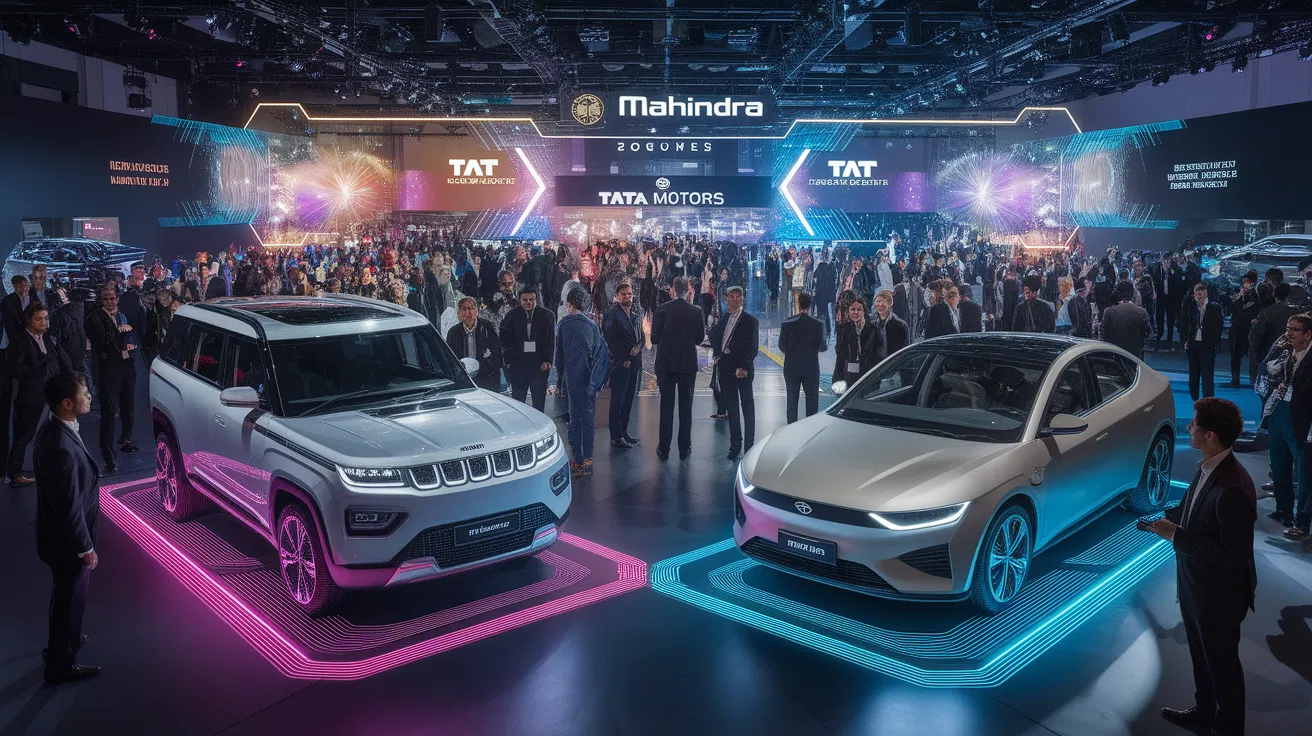
As 2025 draws to a close, Mahindra and Tata Motors have emerged as the clear frontrunners in India’s automotive landscape, particularly in the SUV and electric vehicle segments. Both manufacturers have outpaced competitors, including Hyundai, showcasing remarkable growth driven by innovative designs and robust sales strategies.
Record-Breaking Financial Performance
Tata Motors delivered a stunning performance this fiscal year, achieving a consolidated revenue of ₹4,396 billion and a net profit of ₹28,139 crore. This transformation was fueled by a strong showing in both commercial and passenger vehicles, with the Tata Punch leading as India’s top-selling SUV. Notably, 36% of Tata’s sales now stem from CNG and electric vehicles, reflecting a significant shift towards sustainable mobility.
Meanwhile, Mahindra & Mahindra reported revenue of ₹1.59 lakh crore and a net profit of ₹14,073 crore, primarily driven by an impressive surge in SUV registrations, which are projected to reach 5.58 lakh units this year. The company’s strategic focus on SUVs and tractors has solidified its position in a booming market.
Market Dynamics and Competitive Edge
The competitive landscape in India’s auto sector has shifted dramatically, with Tata and Mahindra gaining substantial market share. Tata Motors’ remarkable turnaround has been bolstered by significant cost reductions, including a ₹36,000 crore cut in debt, allowing it to emerge debt-free this year. This financial agility positions Tata well for future expansions, particularly in the EV space, where models like the Punch.ev continue to gain traction.
- Tata Motors: Revenue from passenger vehicles hit ₹484 billion.
- Mahindra & Mahindra: Maintained an EBITDA margin of 14.8%.
Future Outlook and Challenges Ahead
Looking ahead, both companies face challenges as they transition into FY26. Tata Motors is expected to experience a slight revenue dip of 2.5% in Q1 FY26, alongside rising costs impacting commercial vehicle operations. Conversely, Mahindra is set to leverage its established market presence to sustain growth in the face of these challenges.
Both manufacturers are keenly focused on expanding their electric vehicle offerings and enhancing infrastructure to support EV adoption. The ongoing demand for SUVs and the increasing preference for electric mobility signify a promising landscape for Mahindra and Tata Motors.
As the automotive sector continues to evolve, Mahindra and Tata’s strategies not only reflect their resilience but also set the stage for future innovations in India’s competitive automotive market.
Leave a Reply